Glaciers & Icebergs
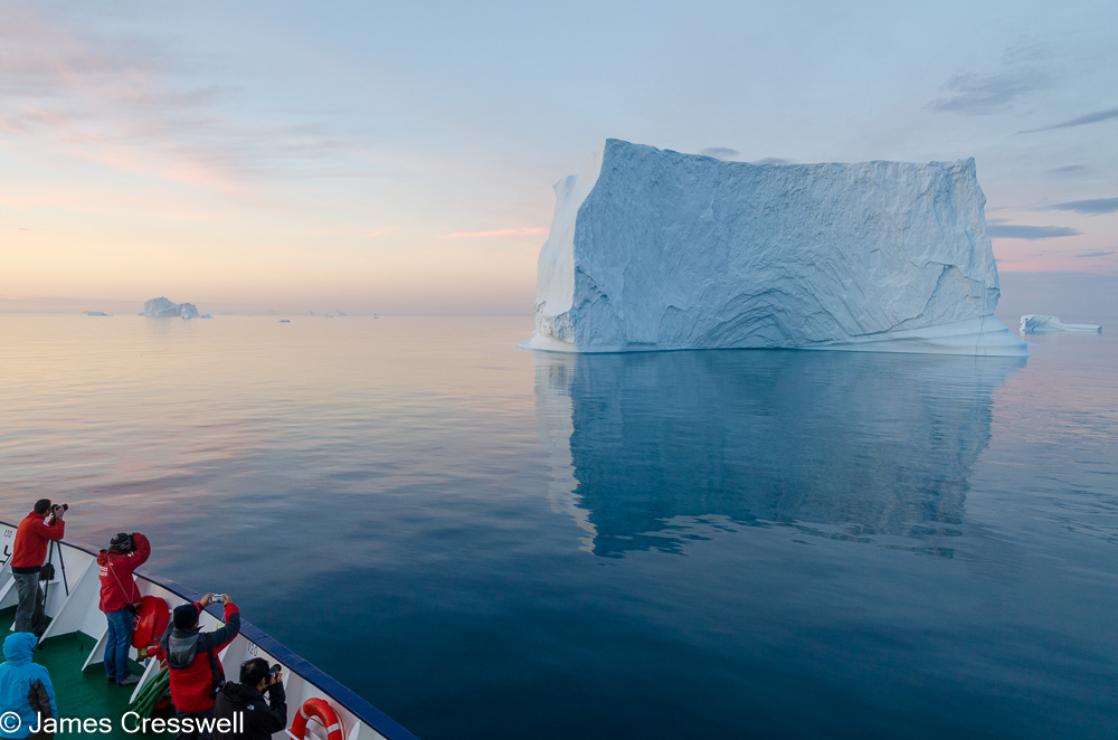
Glaciers and icebergs are formed by snow which falls up the land and builds up layer upon layer, compressing to become ice. If this ice starts to move from an area where it is accumulating to an area where it is ablating then it is a glacier, a river of ice which has huge erosive force. Glaciers vary in size from cirque glaciers to continental scale glaciers such as the East Antarctic Ice Sheet which is up to 5 km thick. If a glacier reaches the sea or a lake pieces of it will break off, these pieces are icebergs.
Glaciers feature in the follow trips and destinations:
Antarctica
Weddell Sea Explorer - Antarctica is the most heavily glaciated place in the world. Glaciers and icebergs are seen throughout this trip especially in Antarctic Sound's famous 'Iceberg Alley'.
Greenland
Spitsbergen & Northeast Greenland - Glaciers as well as huge icebergs are seen throughout this voyage.
Iceland
A Vulcanologist's Dream - Iceland is the land of Fire and Ice. On the trip we visit several outlet glaciers of the Vatnajökull ice cap
Switzerland
An Alpine Adventure - the tour features several glaciers such as the Aletsch and Rhone glaciers
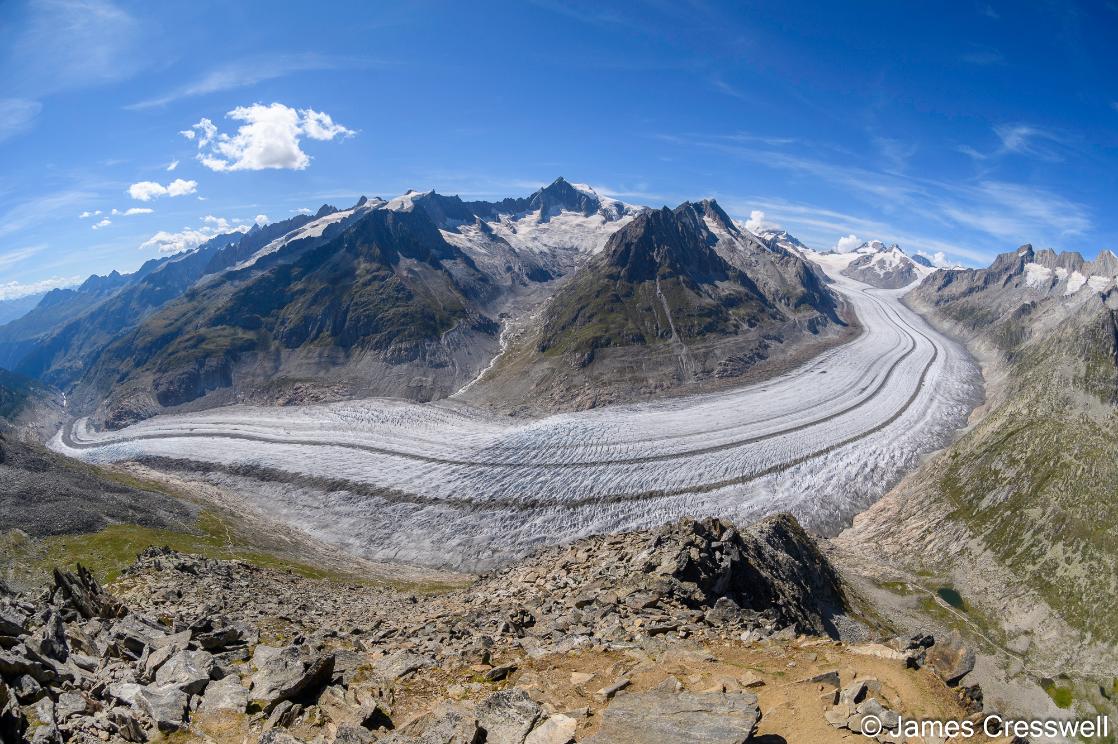
The Aletsch glacier in Switzerland
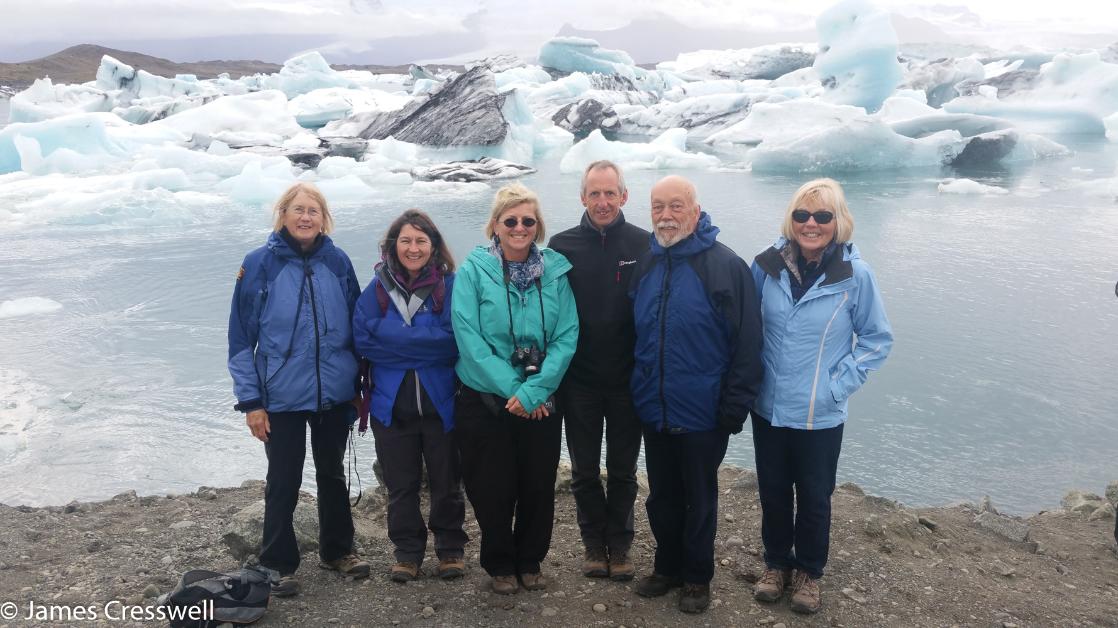
A GeoWorld Travel group with small icebergs inJokulsarlon Lagoon - Iceland
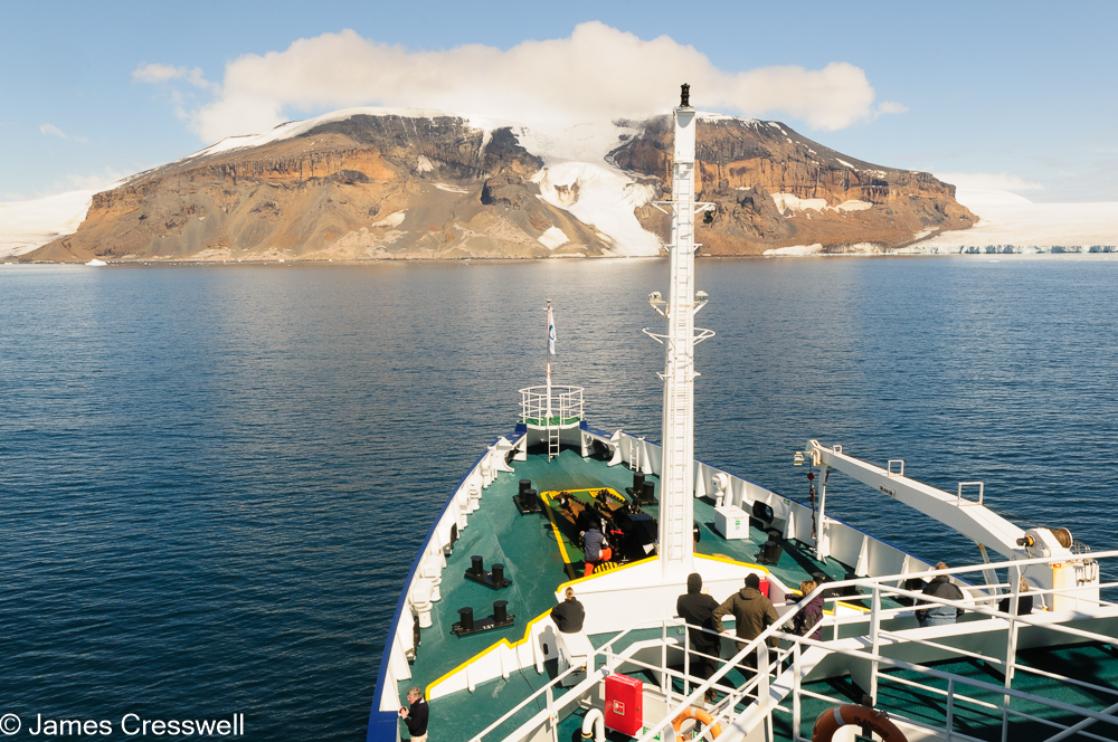
A glacier flows down an extinct englacial volcano in Antarctic Sound, at the entrance of the Weddell Sea, Antarctica.