Shetland
A Tectonic Jigsaw
Lerwick TO Lerwick
22 - 26 September 2026 *5 spaces*
5 days/4 nights
£775
* * * * *
17-21 June 2027 *7 spaces*
5 days/4 nights
£TBC
Remote, wind-scoured, and astonishingly compact, Shetland packs nearly three billion years of Earth history into one small archipelago. Often described as Scotland’s geology in miniature, it brings together ancient continental crust, fragments of ocean floor, volcanic systems, major fault zones, and fossil-bearing sedimentary rocks, earning Shetland its UNESCO Global Geopark status. This five-day tour focuses on the core of that story, from the world-class ophiolite of Unst—where mantle rocks and oceanic crust are exposed at the surface—to fault-controlled coastlines, high-grade metamorphic rocks, sedimentary basins, and volcanic remnants shaped by the full force of the North Atlantic. Big tectonic ideas are made vivid through dramatic scenery, classic field sites, and a clear geological narrative, creating an immersive and deeply rewarding journey through deep time.
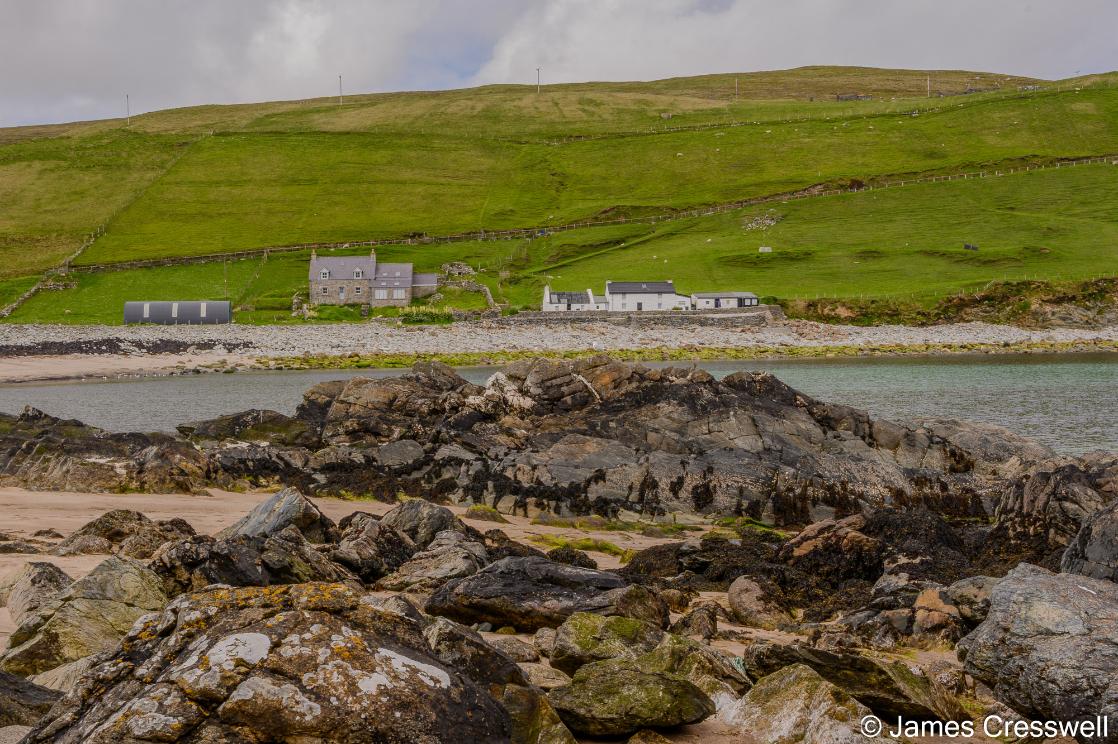
Norwick Beach marks the junction between ancient continental crust and obducted oceanic crust, where the Iapetus Ocean was closed during the Caledonian Orogeny. (Day 2)
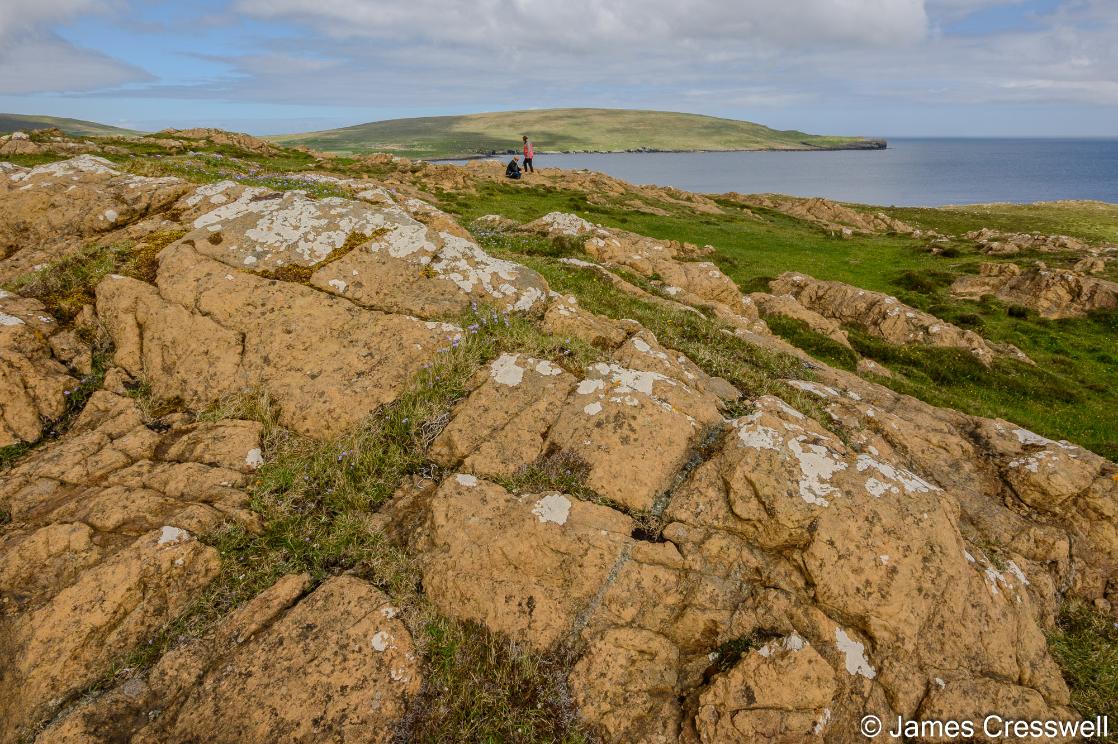
Mantle Rocks of the Unst Ophiolite. (Day 2)
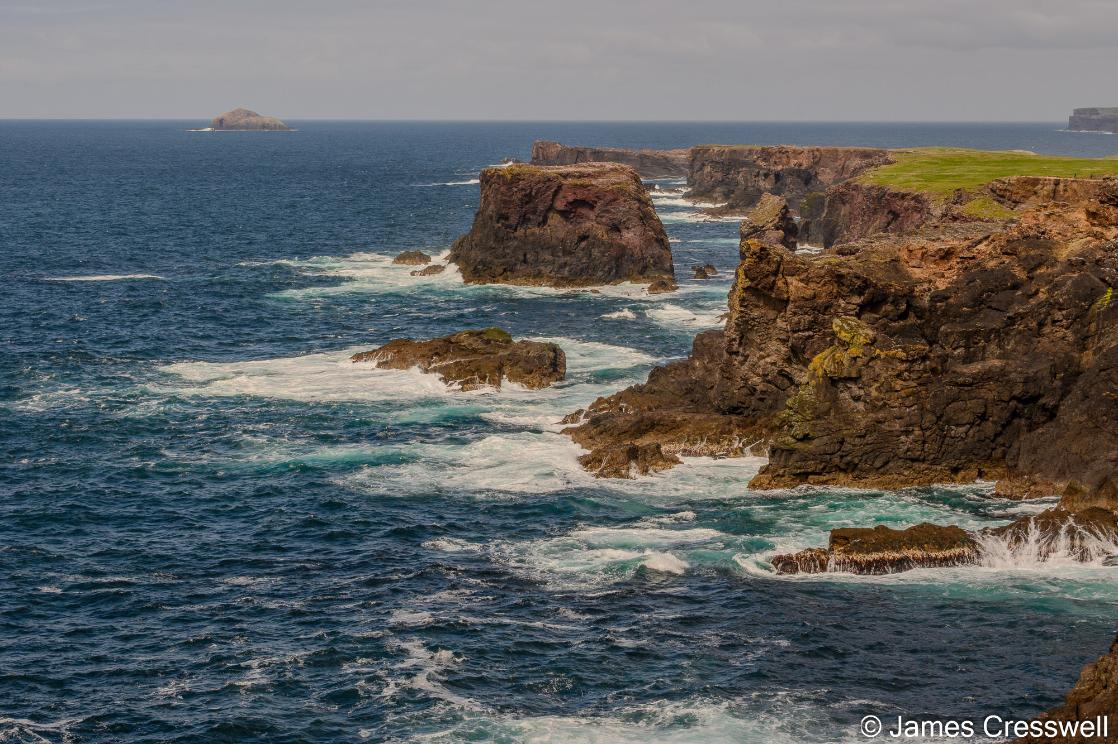
The Eshaness coast exposes the deeply eroded core of an ancient volcano, revealing lava flows, intrusions, and explosive deposits shaped by extreme North Atlantic erosion. (Day 3)
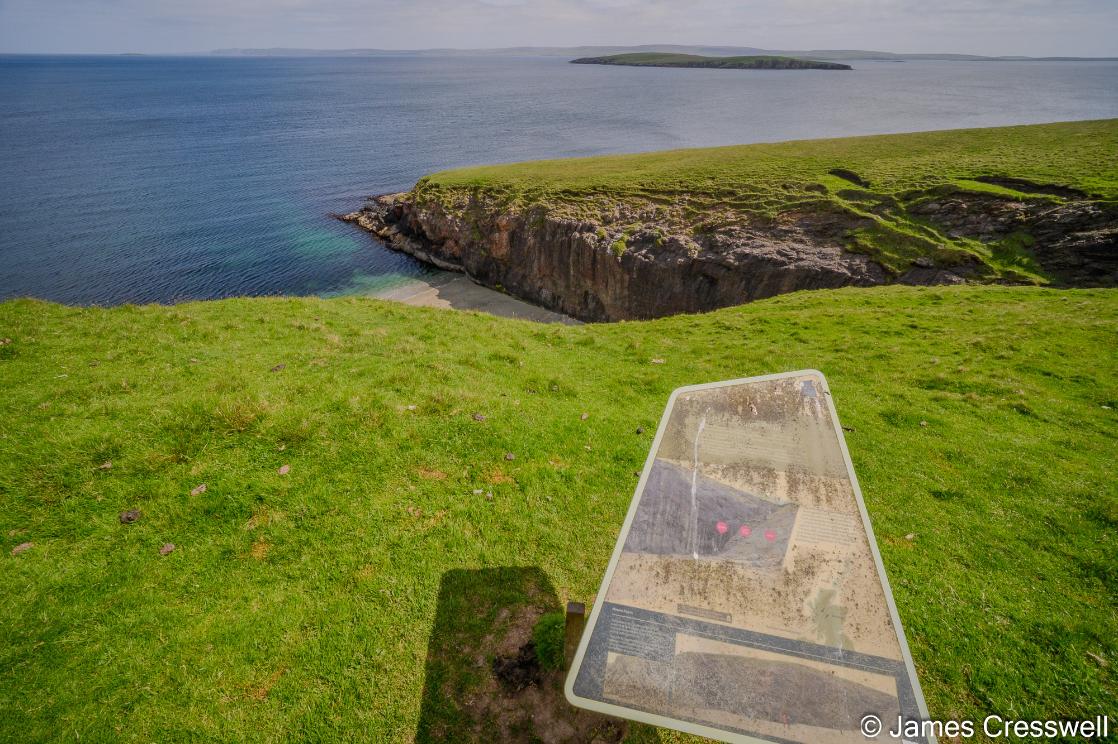
The Walls Boundary Fault near Ollaberry, marks a major tectonic divide separating distinct crustal blocks, forming Shetland’s clearest onshore expression of the Great Glen Fault system. (Day 3)
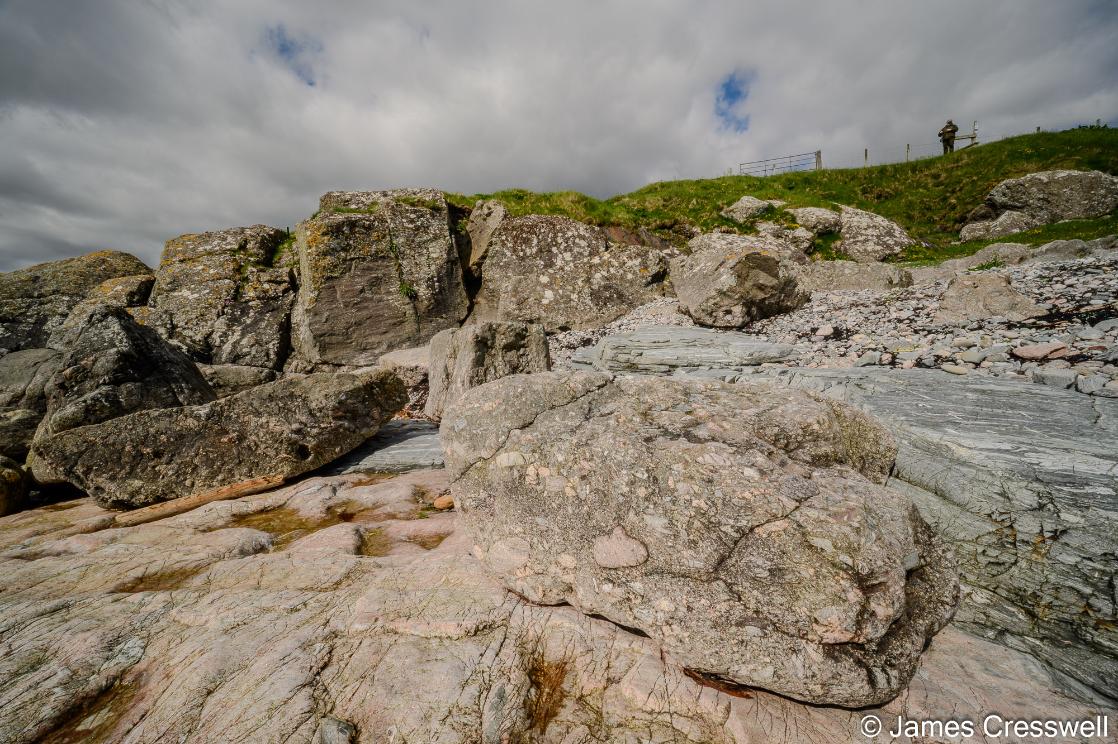
Devonian-age conglomerates at Quarff rest directly on Caledonian basement, forming a classic nonconformity that marks the transition from mountain building to erosion and sedimentation. (Day 4)
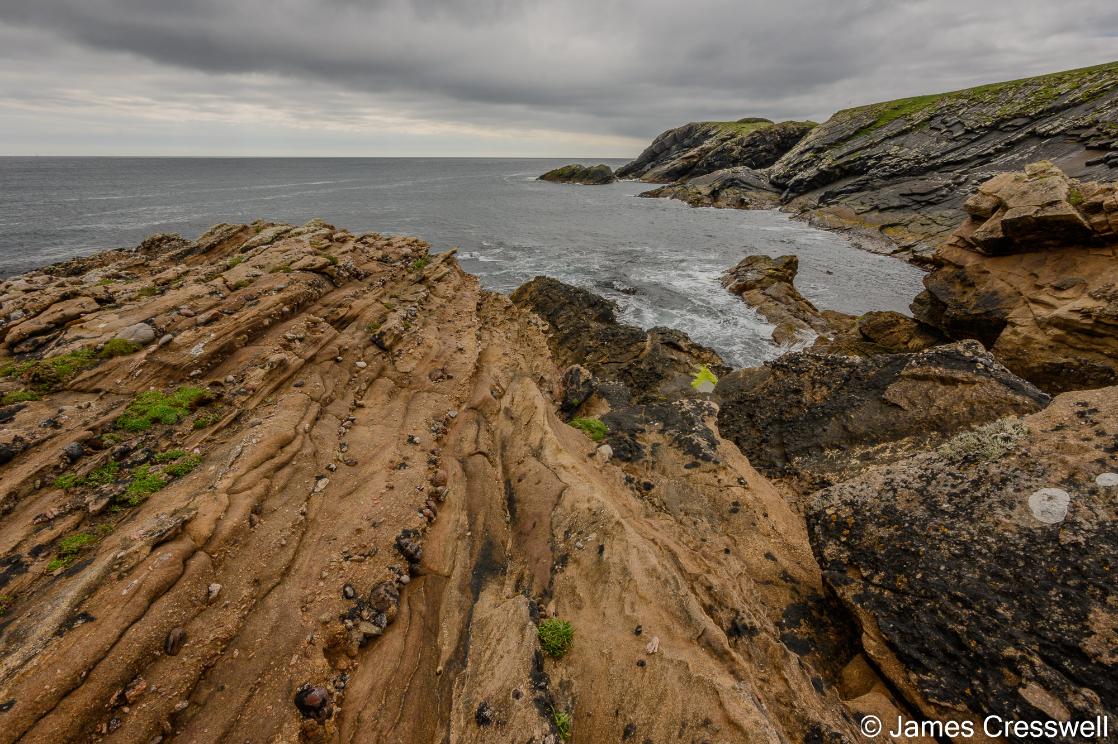
Old Red Sandstone near southern Shetland Mainland, deposited by ancient rivers as the Caledonian mountains were worn down and the landscape began to open out. (Day 4)
Day 1: Arrival in Lerwick. If you are flying in to Sumburgh Airport (LSI), an airport transfer to Lerwick can be arranged. If you are arriving by ferry, our accommodation is a short taxi ride from the ferry port. There will be a group dinner arranged this evening, to give you a chance to meet your fellow travellers.
Day 2: Unst and Central Mainland. We will begin our tour of Shetland with a ferry crossing to the most northerly island of Unst. It is an island in two halves - the western half is comprised of Dalradian rocks from the ancient continent of Laurentia while the east is a section of oceanic crust (an ophiolite) thrust onto the continental mass when the Iapetus Ocean closed around 420 million years ago. The tour will start at Norwick Beach, where the two halves (continental and oceanic crust) meet, before visiting the Moho - the boundary between Earth’s crust and the mantle – at Hagdale and Hamar. We will then explore Belmont Quarry, which was once the largest chromite quarry in the UK. Our journey through the Shetland ophiolite will culminate in an expanse of serpentine desert, which is home to Edmondstons Chickweed - a plant found nowhere in the world except Unst. Before taking the ferry south we’ll take time to explore the ferry terminal area, where we can find the ophiolite shear zone. In the afternoon we will make our way south through the Central Mainland discovering Shetland’s Moine and Dalradian rocks, including limestones that tell a story of a snowball earth, and the distinctive and beautiful Valayre Gneiss. We will see Dalradian limestones and boudinage at Kirkhouse Quarry/Burn and the Moine/Dalradian boundary at Grobsness Quarry. At Strom Ness, there will be the chance to see cap carbonates. Finally, we will enjoy a last view over Shetland’s ancient capital of Scalloway, as we trace the line of the Nesting Fault. We then return to our accommodation in Lerwick.
Day 3: North Mainland. Today is an opportunity to get to know the North Mainland. With dramatic rugged hills, sea cliffs and stacks, this is a landscape to remember. We will begin by taking a scenic route north to Mavis Grind – a narrow strip of land with North Sea on one side and the Atlantic Ocean on the other. Between the two, a geowall provides an insight into the complex geology we will witness throughout the day, beginning with extraordinary granite and diorite mixing at the Mavis Grind quarry. Breath-taking views may be enjoyed along the Eshaness coast as we walk through the flank of an ancient volcano and find vivid traces of its explosive past. The landscape remains dynamic today - as one of the highest energy coastlines in the world it is battered by the full force of the North Atlantic. In the afternoon we will enjoy the beach at Braewick - granite at the eastern end is faulted against Devonian sandstones and volcanics to the west. We will then follow the magnificent Ronas Voe beneath Ronas Hill, Shetland’s highest point at 450m formed as a granite pluton in the roots of the Caledonian mountains. At our finishing point of Ollaberry we will encounter the Walls Boundary Fault - the best exposure of the Great Glen Fault to be seen anywhere in Scotland. We finish the day back at our accommodation in Lerwick.
Day 4: South Mainland. On our final touring day, we will see some of Shetland’s youngest rocks, still nearly 400 million years old! We will start with Devonian alluvial fan deposits at Rova Head in Lerwick before experiencing Shetland’s Siccar Point - a nonconformity at Quarff. Braided river deposits may be seen as we take a walk along the Scatness peninsula. Lunch at Sumburgh head in the vicinity of a Stevenson lighthouse will afford views of dramatic cliffs teaming with seabirds including puffins, guillemots, razorbills and fulmars. This site played host to a WW2 radar station that successfully gave early warning of an attack on the British naval fleet stationed at Scapa Flow. The Old Red Sandstone cliffs are also home to Asterolepis Thule – a fossil fish found nowhere else in the world. We will make the connection between geology and archaeology in the afternoon with a visit to a massive sulphide deposit at Garths Ness which was mined in the 19th Century and a Viking soapstone quarry at Catpund. We return to Lerwick to enjoy a farewell group meal together.
Day 5: Departure. You can depart at any time this morning, or you may wish to extend your travels. Transfers to Sumburgh Airport (LSI) can be arranged for departure flights this morning.
INCLUDED
Geological guiding from Robina Barton
Transfer to/from airport/ ferry port
En-suite hotel accommodation in Lerwick
Breakfast
All picnic lunches
Transportation during the tour
Ferry crossings between islands
NOT INCLUDED
Flights or ferry crossings to and from Shetland
Dinners
Tips (local restaurants, hotel + guide)
CARBON GENERATED BY THIS TOUR