Tanzania
A Geological Safari
8 - 17 December 2026: "Pioneers" Tour (by invite only)
December 2027/January 2028: Dates & prices TBC
Embark on a once-in-a-lifetime 10-day expedition through the dramatic landscapes of northern Tanzania, where geology and wildlife converge in spectacular fashion. From the towering volcanic peaks of Mount Meru and the unique carbonatite lavas of Oldoinyo Lengai, to the ancient granitic kopjes of the Serengeti and the UNESCO-listed Ngorongoro Caldera, this tour reveals Earth’s tectonic and volcanic history at every turn. Alongside these extraordinary geological features, witness Africa’s iconic wildlife in their natural habitats: lions lounging on kopjes, herds of migrating wildebeest and zebra, tree-climbing lions, black rhinos, flamingos on hypersaline lakes, and elephants wandering fault-fed forests. Combining geological exploration with immersive game drives, this tour is perfect for adventurers, nature lovers, and anyone fascinated by the dynamic forces that shape our planet — offering an unforgettable journey where science meets the wild.
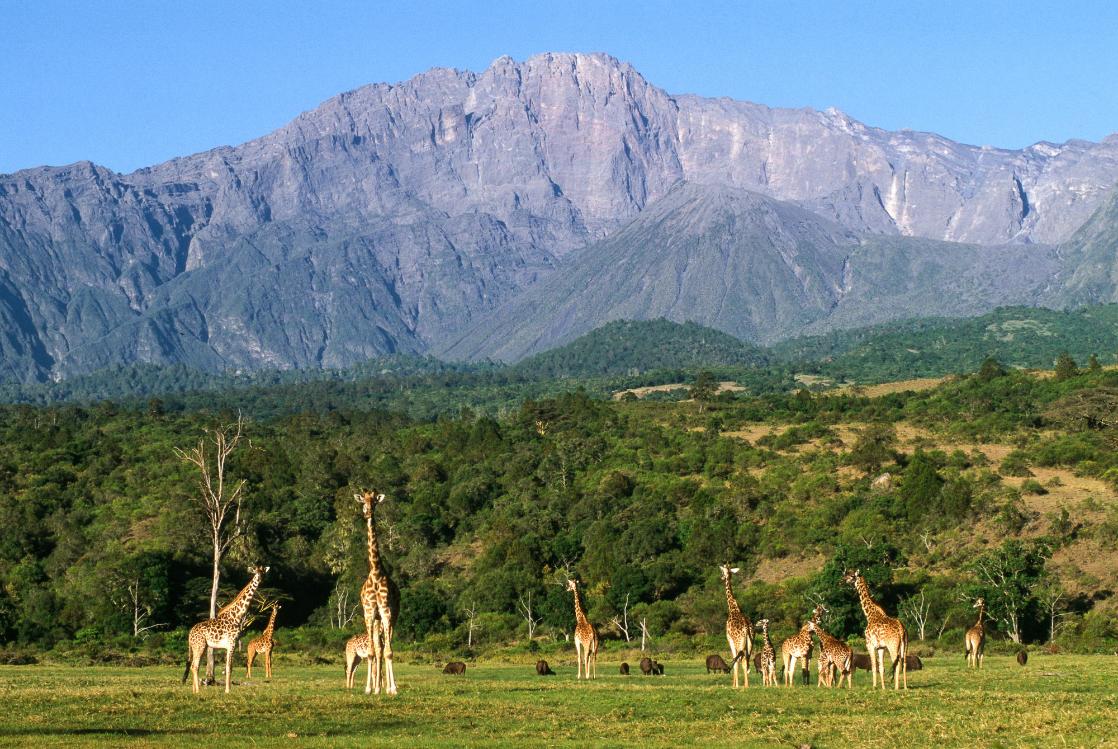
The view of Mt Meru cinder cone from inside Mt Meru Caldera in Arusha National Park (Day 2).
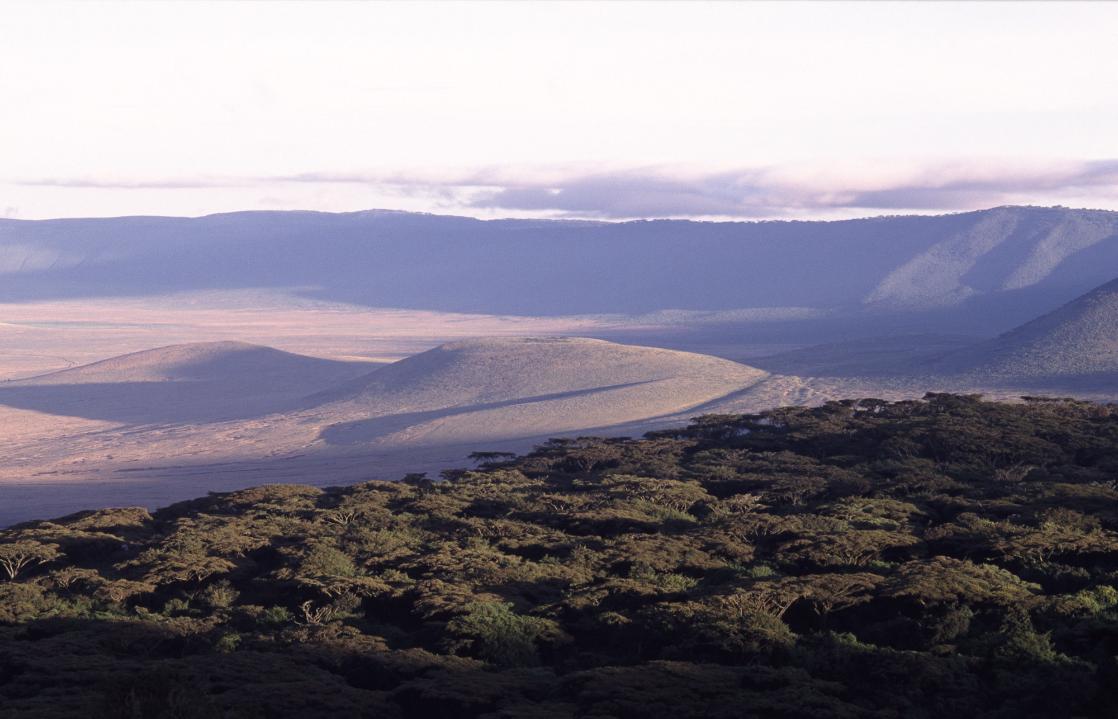
Ngorongoro Crater a huge volcanic caldera in the Ngorongoro Lengai UNESCO Global Geopark and Ngorongoro Conservation Area World Heritage Site (Days 2 & 3).
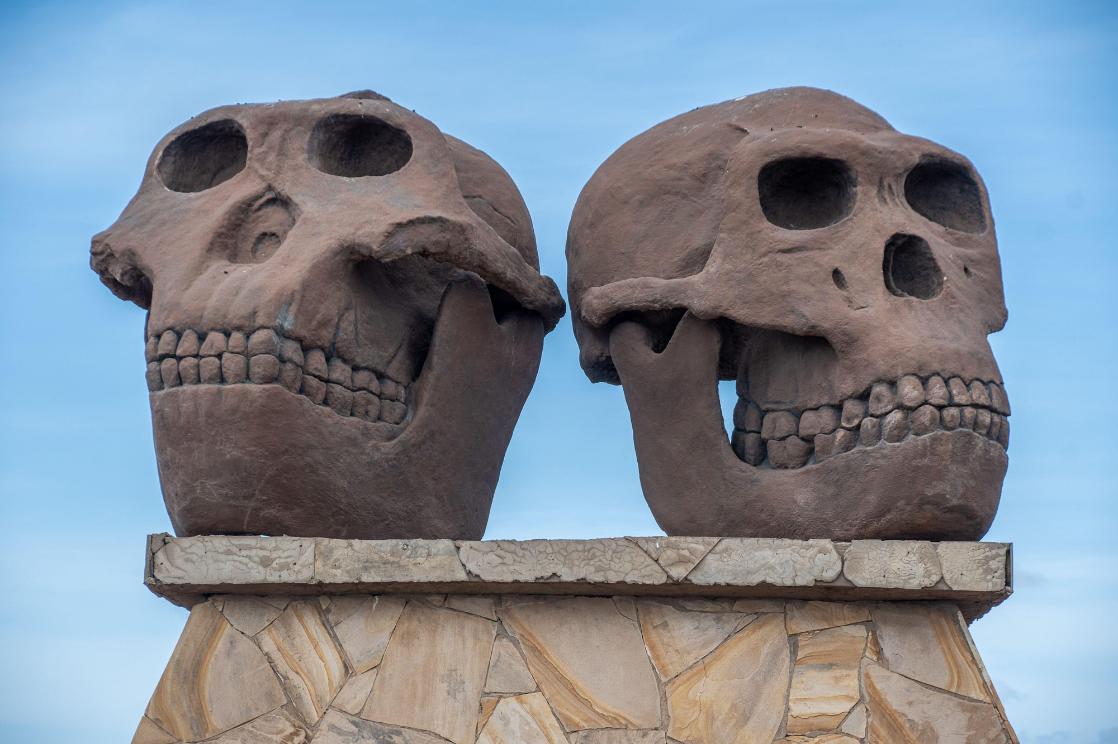
A sculpture in Olduvai Gorge in the Ngorongoro Lengai UNESCO Global Geopark and Ngorongoro Conservation Area World Heritage Site
(Day 4)
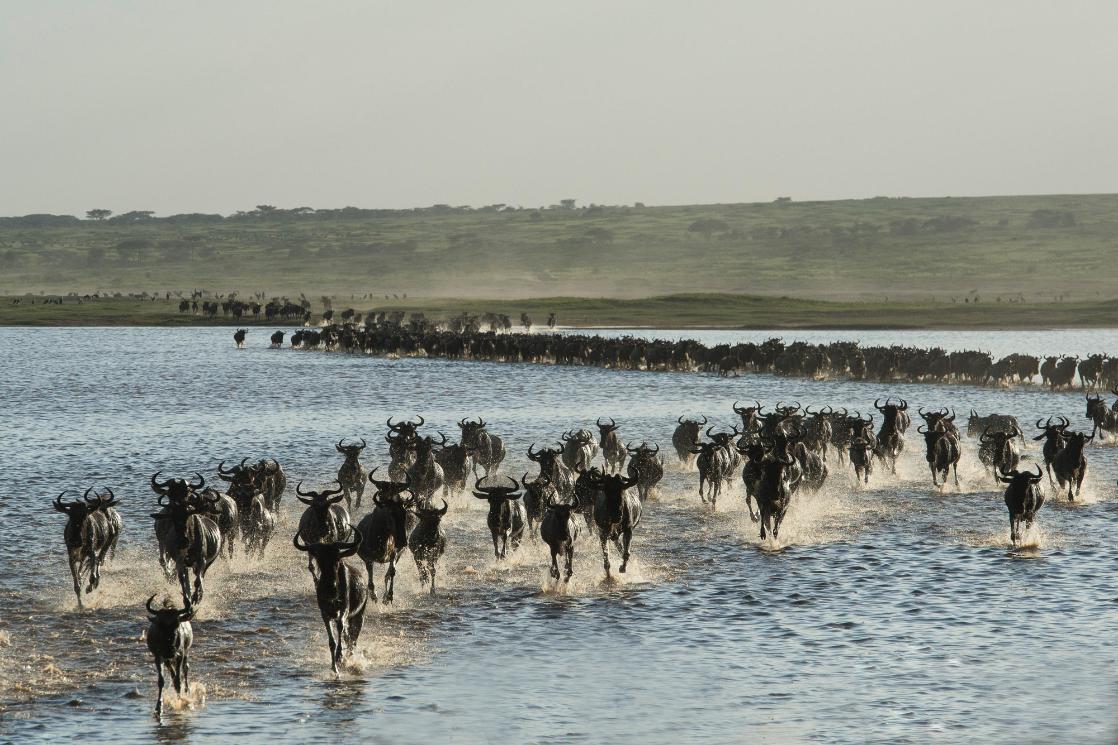
The wildebeest migration at Ndutu Lake, Serengeti National Park World Heritage Site(Days 4, 5 & 6)

Lions at Moru Kopj, Serengeti National Park UNESCOWorld Heritage Site
(Day 6)
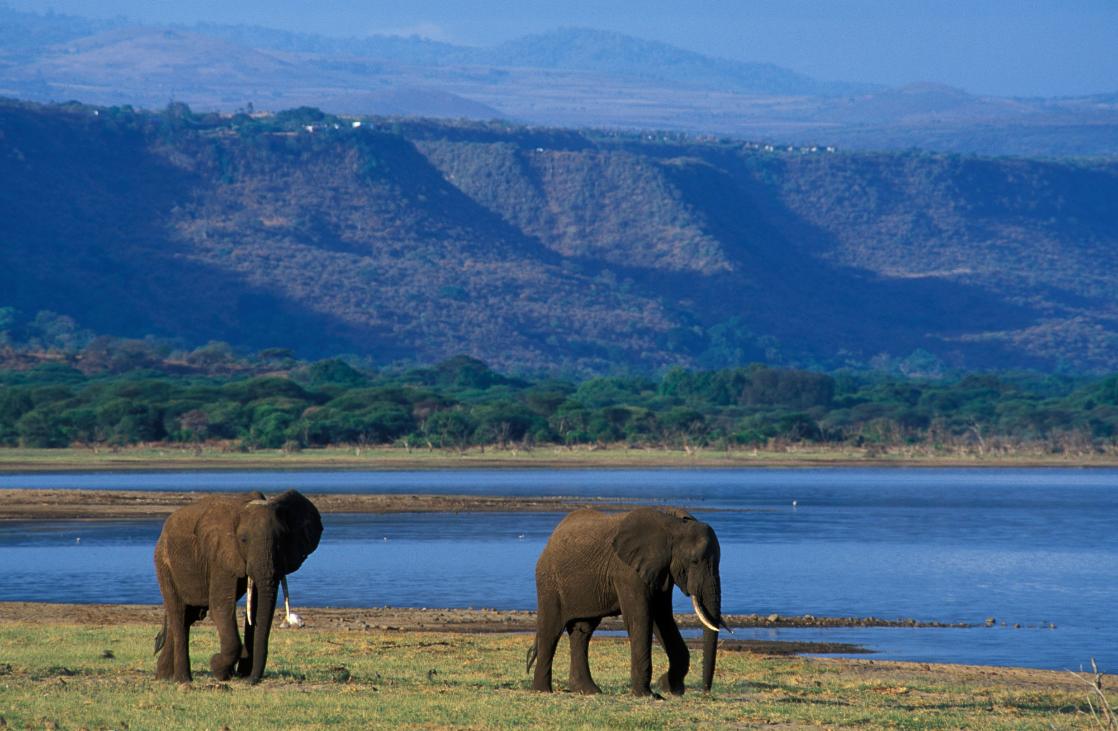
Elephants in front of the Manyara Escarpment of the Gregory Rift,in Lake Manyara National Park (Day 7)
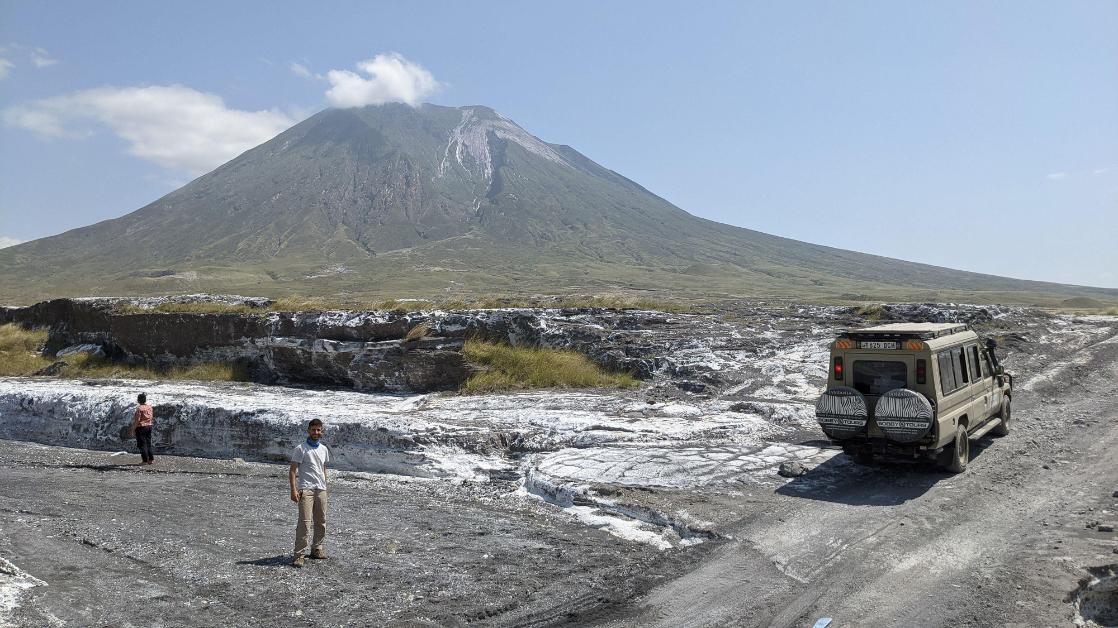
Stopping to examine the unique natrocarbonatite lava flows of Oldoinyo Lengai, in Ngorongoro Lengai UNESCO Geopark (Day 8)
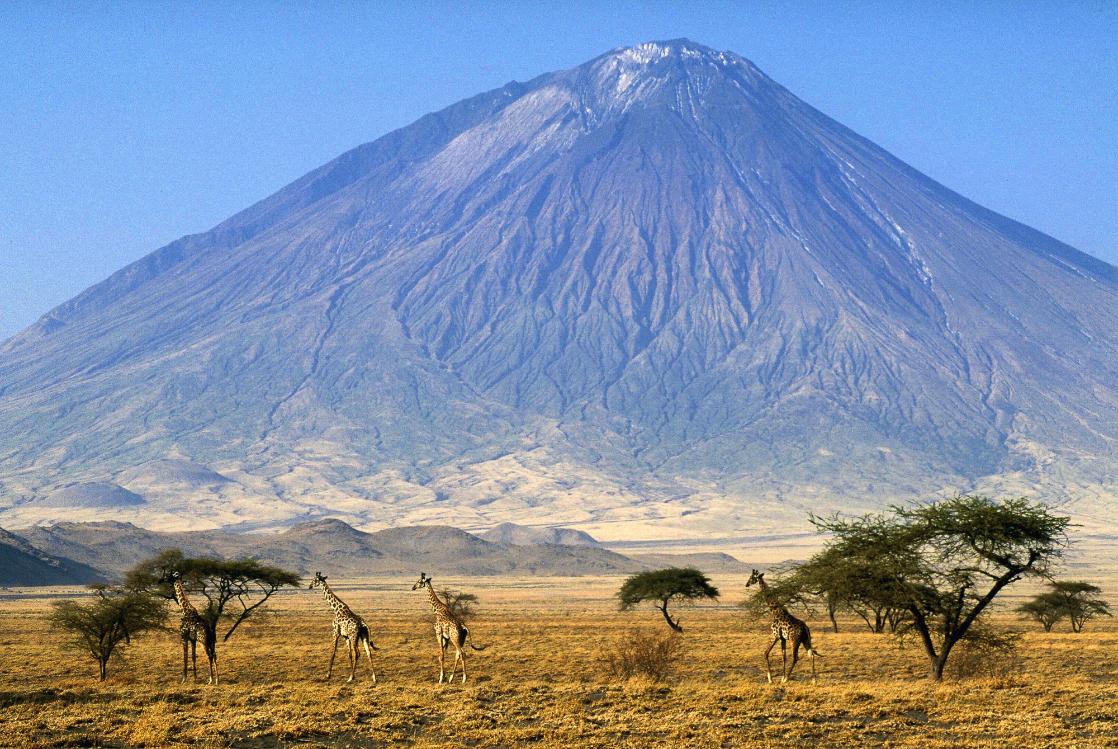
Oldoinyo Lengai volcano, in Ngorongoro Lengai UNESCO Geopark
(Day 9)
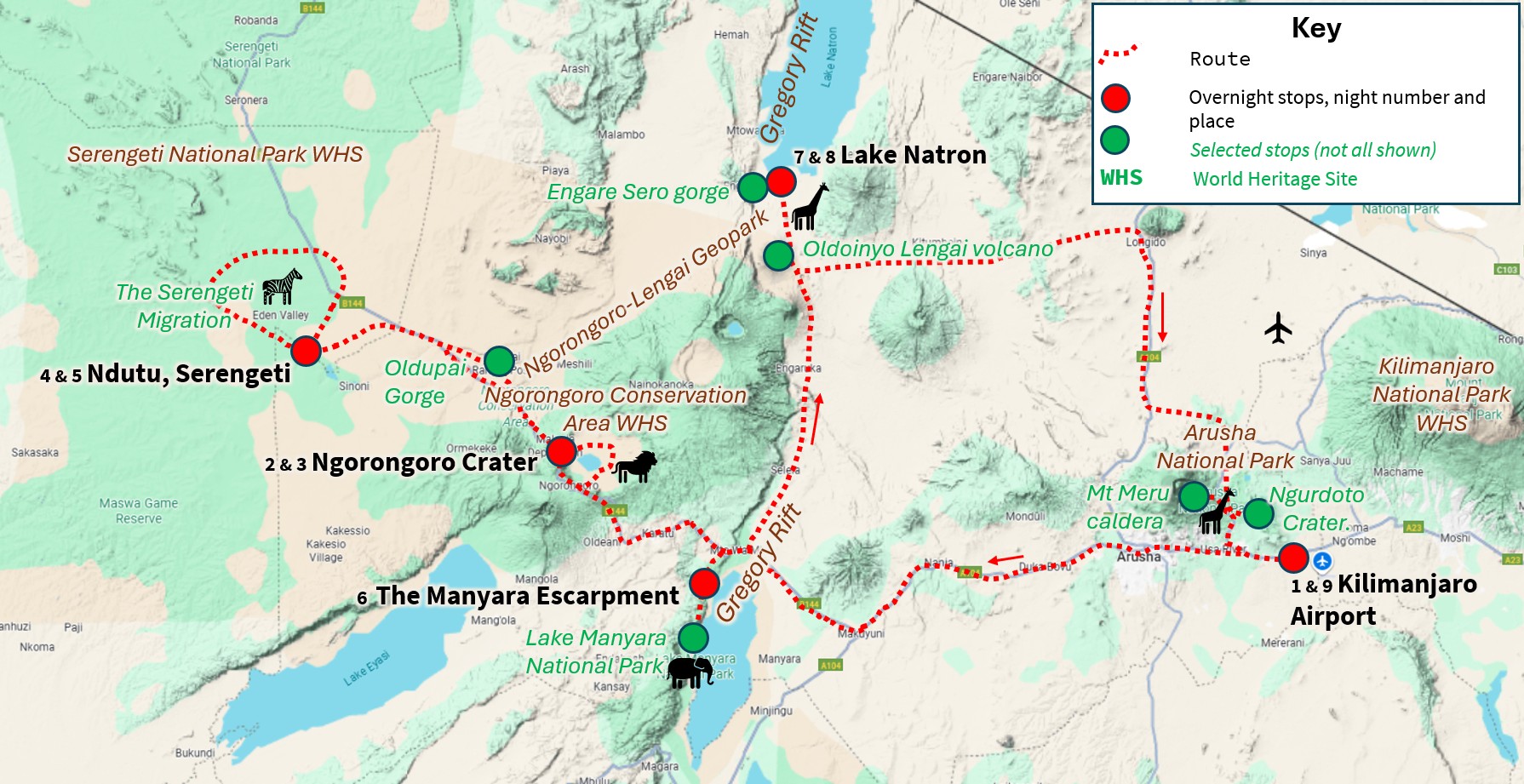
Day 1: Arrival. Arrive at Kilimanjaro International Airport (JRO) and transfer to a nearby lodge for rest and acclimatisation. This gentle first evening provides space for introductions and an overview of the geological and wildlife themes that will guide the journey ahead.
Day 2: Arusha National Park, the Great Rift Valley and Ngorongoro Crater. The day begins at Kitoto Viewpoint in Arusha National Park, an extraordinary window onto the volcanic structures of Mount Meru and its nested caldera system. As we drive westward, we stop at the Lake Manyara escarpment — the towering western wall of the East African Rift Valley, where a dramatic normal fault scarp marks one of Earth’s most active continental rift zones. We then ascend onto the high volcanic plateau of Ngorongoro, entering the Ngorongoro Conservation Area: a UNESCO Global Geopark and World Heritage Site, celebrated for its blend of Quaternary volcanism, tectonics, and unparalleled megafauna. Night: Ngorongoro Serena Safari Lodge (or similar).
Day 3: Full Day Exploring the Ngorongoro Crater. A full-day descent into the Ngorongoro Caldera — one of the world’s largest intact volcanic collapse structures, formed after the evacuation of a massive magma chamber around 2.5 Ma. The crater floor showcases faulted lava sequences, trachytic domes and hydrothermal alteration zones, all while supporting East Africa’s densest concentration of large mammals. Expect sightings of lion, black rhino, elephant, abundant plains game, and diverse birdlife thriving within this natural volcanic amphitheatre. Night: Ngorongoro Serena Safari Lodge (or similar)
Day 4: Olduvai Gorge, Shifting Sands and Serengeti. We travel to Olduvai Gorge, the world-renowned palaeoanthropological site where tectonics and sedimentology have preserved a continuous record of human evolution. The stratified tuffs, basalts and lacustrine beds set the stage for the discoveries of Homo habilis and early Homo erectus. Nearby, the Shifting Sands — a crescentic dune of magnetised volcanic ash — offers a striking demonstration of aeolian processes acting on carbonatitic and nephelinitic material from Oldoinyo Lengai. We finish with a wildlife-rich game drive in the Ndutu area of the Serengeti, following predators and migratory herds across the volcaniclastic plains. Night: Ndutu Lake area
Day 5 – Migration, Moru Kopjes, Gol Kopjes & Simba Kopjes. A full day in the southern Serengeti, combining geology and wildlife at its finest. The iconic kopjes — born from deeply weathered Precambrian granite inselbergs — rise from the savannah as ecological islands attracting lions, cheetahs, hyenas, and rock-dwelling species. At Moru, we explore the glacially smoothed granite pavements, ancient Maasai rock art, and remarkable boulder forms resulting from spheroidal weathering. We also track the seasonal path of the Great Migration as vast herds cross landscapes shaped by tectonic uplift and long-term denudation. Night: Ndutu Lake area
Day 6 – Serengeti to Lake Manyara. A final morning wildlife drive gives us time to encounter predators on the move before we exit the Serengeti. By afternoon we return to the Rift Valley margin, enjoying sweeping geological vistas from the escarpment overlooking Lake Manyara’s fault-bounded basin. Large troops of olive baboons, elephant corridors, and diverse raptors often accompany this descent through changing ecozones. Night: Lodge on the escarpment above Lake Manyara
Day 7 – Lake Manyara to Lake Natron. We begin with a Lake Manyara game drive, where groundwater-fed springs, fault scarps, and alluvial fans help shape habitats for tree-climbing lions, elephant, hippo, and prolific birdlife. After lunch we drive north into increasingly arid rift terrain, stopping at God’s Pit, a dramatic tectonic fissure illustrating active crustal extension. Later we examine the unique natrocarbonatite lava flows of Oldoinyo Lengai — the only active carbonatite volcano on Earth — whose pale, fast-weathering lavas are unlike anything else on the planet. For the very fit and adventurous, there is the option of a night ascent of Oldoinyo Lengai, rising approximately 2,960m from the rift floor to the summit. This is an exceptionally strenuous climb, taking several hours, and should only be attempted by participants in excellent physical condition. The effort is rewarded with an unforgettable sunrise over the rift valley and the volcanic landscapes of northern Tanzania. Night: Lodge at Lake Natron
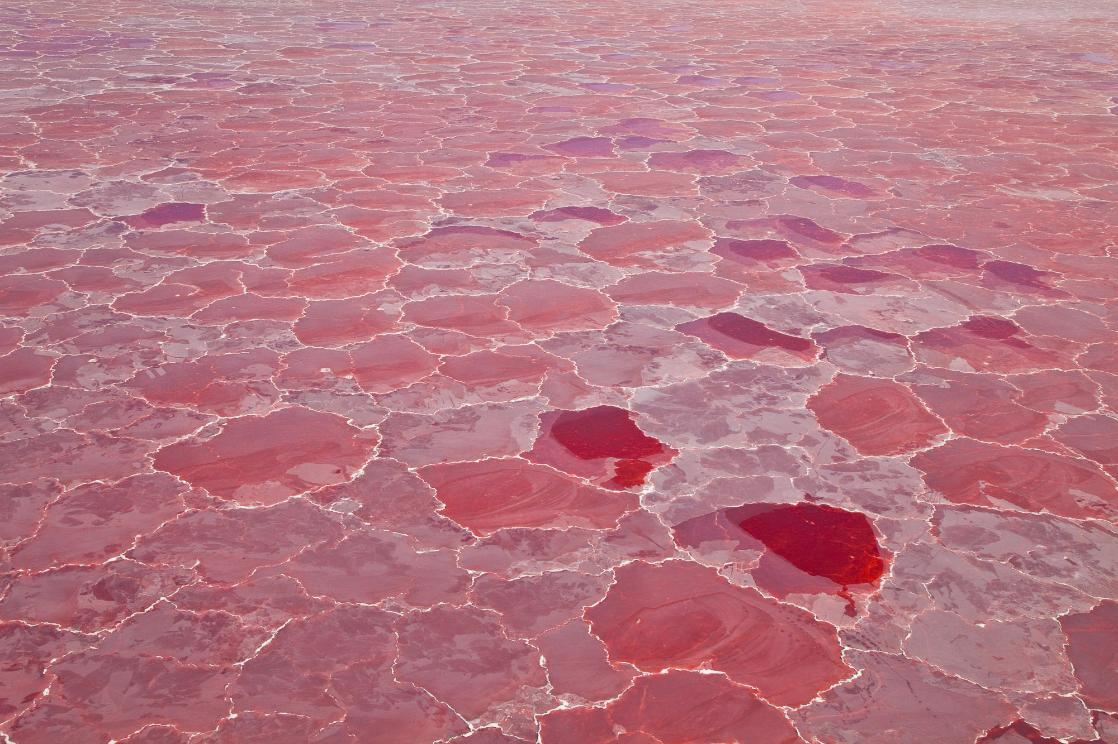
Day 8 – Lake Natron. Today is dedicated to the extraordinary landscapes of Lake Natron. We walk along the hypersaline lakeshore — a key flamingo breeding habitat shaped by volcanism, evaporation, and fault-controlled hydrology. We then visit the Engare Sero footprints, over 400 Late Pleistocene human tracks preserved in rapidly cemented volcanic ash from Lengai. In the afternoon, we explore the Engare Sero gorge, carved through faulted volcaniclastic deposits and showcasing active mass-movement, canyon incision, and hydrothermal alteration. Optional night ascent of Oldoinyo Lengai available. Night: Lodge at Lake Natron
Day 9 – Lake Natron to Arusha National Park. Our final touring day crosses the Rift Valley floor and skirts the Longido volcanic system before returning to Arusha National Park to visit the Momella Lakes and Ngurdoto Crater. These maar-dominated volcanic structures provide a last look at the interplay between phreatomagmatic volcanism and wildlife-rich alkaline lakes. Night: Lodge near Kilimanjaro Airport
Day 10 – Departure. We transfer to Kilimanjaro Airport for departures.